



Thanks to more platforms paying for stand-up than ever, technological advancements that make production significantly cheaper, and social platforms that make promotion easier, we’re in the middle of a stand-up-special gold rush. Depending on how you stream, you’re likely to encounter a hastily assembled 20-minute “special” next to the masterpieces of the best comedians working. With hundreds of specials being algorithmically recommended at the same time, it’s hard to make sense of the glut. That’s what this column is for. Every month, we’ll suggest anywhere from three to five specials that are worth watching. While they may not all necessarily be the “best,” they’re worth your time for being funny, ambitious, moving, or bad in a way that must be reckoned with. There is gold in them hills, and this column will share only the most choice nuggets.
Dave Chappelle, The Unstoppable … (Netflix)

The first 35 minutes of The Unstoppable … are typical modern Dave Chappelle: a hodgepodge of underwritten jokes and commentary about topical issues and recent grievances. This section shows what happens when a comedian goes to great lengths not to be vulnerable or reveal anything about his actual life. Its primary focus is a full-throated defense of Chappelle’s participation in the Riyadh Comedy Festival. (Of course, he throws in a few trans jokes as well.) I’d recommend skipping this section, but threads in it about Saudi Arabia, Charlie Kirk, and Diddy pay off in the closer. The latter 40-minute section is worth the watch and represents Chappelle’s other main mode: long, allegorical, largely laugh-free speeches that combine a few disparate threads from Black history, his personal history, and current events. The Unstoppable … contains the most compelling version of that to date, combining stories of revolutionary Black boxer Jack Johnson, Diddy’s arrest, Chappelle’s experience going to nightclubs he was told were under FBI surveillance, his friendships with and the deaths of both rapper Nipsey Hussle and legendary street comedian Charlie Barnett, meeting Stevie Wonder, John McCain’s voting record, and the complicated legacy of holistic-medicine specialist “Dr. Sebi.” The oratory piece is about the modern state of disinformation and how easy it is to fall victim to conspiracy theories.
What is impressive about the Unstoppable closer is the show-versus-tell aspect of the storytelling. Chappelle weaves a web so evocative, so intricate, and with such charisma that the audience doesn’t realize it has gotten caught up in the conspiratorial thinking he warns against until the very end thanks to a very dark joke about Barnett’s AIDS. That’s because Chappelle has always been an unreliable narrator; he mixes historical truth with personal fantasy to make stories feel more connected. His gift is in his own mythmaking, and with The Unstoppable …, he kicks off his closer by telling the audience that the story he’s about to perform is challenging to pull off and demands a lot of concentration. Of course, Chappelle has performed the piece many times before, and he executes it effortlessly here. It reminds me of the story about how Gene Wilder pushed for the Willy Wonka & the Chocolate Factory scene in which Wonka is introduced walking with a cane, seemingly about to fall over, only to gracefully turn the falling into a somersault because, as Wilder later explained, “From that point on, no one will know whether I’m telling the truth or lying.” That’s the point with The Unstoppable …: Don’t trust anyone who says they know anything for sure — even Chappelle.
Kumail Nanjiani, Night Thoughts (Hulu)

As soon as Night Thoughts begins, Kumail Nanjiani needs the audience to know that he is a stand-up comedian and not some actor giving stand-up a try. (“I’d rather you think I invented COVID.”) It’s very important context for Nanjiani’s first special in 12 years. He wants to convey that this hour is something he cares about and hopes the audience will receive with an open heart. That’s because, as a stand-up comedian, Nanjiani speaks honestly about his life in a way that movie stars avoid out of fear of exposing their real self and/or seeming unrelatable. Night Thoughts brings to mind Richard Pryor’s greatest work in that there is power in discussing and revealing the truth behind a public image and, specifically, public scandal.
Nanjiani also brings up his experience as a stand-up as a warning that the audience is about to witness a person who is really good at this thing. And he’s so good, it’s jarring. His writing is impressively sharp (he calls a cheesecake he microwaved during the start of COVID “the devil’s night cereal”) while also being unpredictably structured. The most Nanjiani-y bit of the special is a story about him and his wife, Emily Gordon, looking at their security-camera feed and seeing a young couple break into their backyard to have a picnic by their pool. (On that pool: “If I didn’t have to mention that fact for this story, I would’ve left it out.”) Gordon and Nanjiani decide to turn on the camera’s microphone to hear what the couple are talking about. At first it plays like a funny-enough story, but then the joke pivots when Gordon suggests they drive to their home and confront them. From there, it morphs into a cavalcade of escalating punch lines as Nanjiani and Gordon argue about what would happen: “I don’t want to drive over there, honey. They have a knife.” “We can bring a knife.” “Yeah, I don’t want to get into a knife fight today, my love.” “What happens if I lose?” “Actually, Emily, what happens if I win the knife fight?” “Do I just murder them?” I won’t spoil what happens next, but it keeps on going. A lot of actors have houses with pools, but only a stand-up comedian as good as Nanjiani could write a joke this good about it.
Sarah Sherman, Sarah Squirm: Live + In the Flesh (HBO)

It’s been quite a year for women releasing viscerally disgusting comedy specials — those starring comedians who revel in talking publicly about their genitalia and the goo and hair that comes out of them. And then there is Live + In the Flesh, a special that might, in fact, make you barf. Nothing would make Sarah Sherman (reintroducing here her pre-SNL stage name) happier than if people started posting “Just finished @sarahsquirm’s special” to their Instagram stories with photos of their chunky barf. Consider this a warning: Squirm doesn’t just talk about her hemorrhoids (yawn!), she builds them out of God knows what and has them ooze onscreen to the horrific gasps of the live audience.
“And this is a comedy special?” one might ask based on that description, and it’s a fair question. Sherman herself jokes about how the audience won’t be able to find any jokes in her stand-up. Instead, the special consists of bits in which she sets up a premise and then pushes at it as repetitively as possible in a way that some will find to be the funniest thing in the world and some will find to be just monotonous and annoying. There is a perverse pleasure in watching what she describes as her “high commitment, low payoff” bits and knowing how hard they must bomb sometimes. There are haunted-house attractions, and then there are those haunted-house attractions 20 miles outside town for the real sickos who make you sign a waiver that gives performers the right to touch you. This special is for real sickos.
George Civeris, A Sense of Urgency (VOD)

A Sense of Urgency is niche in a way that the internet no longer really is. Of course, the internet is filled with niche content, like right-wing furry vegan gamers or whatever, but social media requires it to be dumbed down to reach a general audience. George Civeris, on the other hand, tells jokes from the height of his intelligence. References in stand-up so often feel like reheating some meme, but Civeris has references that are refreshingly exclusionary. For example, when talking about the state of heterosexuality and the almost avant-garde nature of progressive straight weddings, he says, “The readings are Gramsci’s prisoner diaries. You’re like, ‘We’re at a winery.’” Yes, it’s a joke for people with master’s degrees, but also people who aspire to have master’s degrees some day. And isn’t that beautiful when so much of stand-up is clips of comics asking their audience when they last farted at work?
The best parts of the special are when Civeris goes off on extended runs in which he creates evocative character portraits. When he considers if he wants to have kids, he describes his fantasy of being in his 60s and having an adult daughter with whom he is very close with an ironic yet bittersweet faux nostalgia: “Maybe she’ll come over to meet the new guy that I’m seeing and we’ll all share a bottle of Sancerre, and then her and I will go into the kitchen, have a little private moment alone just refilling the glasses, and she’ll look up at me, and she’ll go, ‘Dad, I like this one. Don’t fuck it up. Don’t overintellectualize like you always do.’” These moments straddle the line between a New Yorker humor essay and a short story, and honestly, maybe they would make more sense as part of a Simon Rich–esque book. But at this moment, it is more radical for it to be onstage. The book can come later.
Kevin Hart, Acting My Age (Netflix)

Stand-up hasn’t been Kevin Hart’s primary focus over the past decade-plus during his reign as the world’s biggest comedy star, and while his output hasn’t notably slowed, it also hasn’t sparkled with the excitement of his earlier performances. But then came Acting My Age. In the special, Hart is on fire. When he’s locked in, as he is here, Hart’s sets continually build thanks to his twitchy enthusiasm, and his audience doesn’t get a chance to catch their breath until he says, “Good night.”
Acting My Age is one of the best cases I’ve seen for comedians at that level working with writers, who offer perspective when a big-name comedian is mostly riding in private planes. (Like Sinbad once said, “Comedians are funnier when they’re riding the bus.”) Along with his writers, Hart does two smart things to remix his signature blend of vulnerability and extreme confidence. First, they find someone even more successful for Hart to play the underdog to, which allows Hart to believably self-deprecate and talk shit. “Some of the worst jeans I’ve ever seen in my life have been worn by Michael Jordan,” Hart says during one story about why the NBA legend/shoe billionaire doesn’t like him. “Really big back pockets. You can put a Dell computer in his back pocket. Goddamn, Mike, is that a fucking Dell computer in your back pocket? Goddamn, Mike, is that a fucking modem in the other?” Secondly, they focus the entirety of the special on the relatable aspects of aging, including multiple stories about almost sleeping to fluke “dick pill”–related injuries. Ever since 2013’s Let Me Explain, Hart’s work has been caught up with the ridiculousness and fleeting nature of celebrity, but Acting My Age harkens back to 2011’s Laugh at My Pain and his ability to capture the ridiculousness and fleeting nature of being alive.
Jay Jurden, Yes Ma’am (Hulu)

Jay Jurden’s material comes fast — possibly too fast for some. Each line of each joke is accompanied by its own specific, high-speed vocal inflection and choreography. That speed creates a fun paradox: At first, it feels made for internet attention spans but, in reality, Jurden’s punch-line density demands the audience pay attention to him and only him while he’s performing. Yes Ma’am is a special by a millennial try-hard that is about and for millennial try-hards. Jurden made it in protest of what he sees as stand-up’s lowering standards; in his mind, the art form has gotten caught up in the enshittification of the internet. For Jurden, a stand-up comedian should give their audience more at a time when so many entities are giving less.
In practice, this means Jurden’s jokes are tagged for the gods. One bit starts with a joke about how seeing a face tattoo turns Jurden into a baby boomer, which sets up an act-out as a boomer: “Get a job!” But the in-character tags keep coming: “Pull up your pants, drink some milk from a cow, put on some stockings, help me attach this PDF.” Still more: “Oh, by the way, the president is a good man! He’s doing his best, goddamn it. Now come with me for a brisk walk around the mall.” That last tag prompts a completely new set of tags, which then prompts another set of jokes and tags about older people having sex. In a good Jay Jurden performance, every punch line leads to a pile of add-ons and off-shoots, like that one firework that explodes into 12 little fireworks.
Leslie Jones, Life Part 2 (Peacock)

Comedic personas have ideal ages. Sometimes what it takes for a curmudgeon to connect with audiences is them maturing to the age it makes sense for someone to be so grizzled. On the flip side, one of the great challenges many stand-ups face is figuring out who to be onstage after aging out of the youthful stage persona they started out with. Some comedians never do, and it’s a bummer. As Leslie Jones explains on Good One, Life Part 2 is a declaration of this transition. Jones was a force of nature for her first few decades onstage, known for her go-for-broke physicality and getting up in her audience’s faces like a cross between Robin Williams, Robin Harris, and Sam Kinison. There are still a couple act-outs in this hour, including a vivid depiction of a circumcised penis, but, for the most part, Jones remains comparatively stationary in Life Part 2, which allows her material to carry the intensity.
Jones is able to pull off this transition because, in a time of a lot of faux iconoclasts who throw out the same three slurs as everyone else, she is genuinely edgy. The most audacious stand-up bit of the year comes in a section about why she’s happy she didn’t try to get famous in her 20s, which is because she would’ve slept with everybody … including Harvey Weinstein, Bill Cosby, and Jeffrey Epstein. “You think I haven’t fucked worse than Harvey Weinstein?” Jones says at the top of the joke before switching to her signature scream. “I fucked a postman once! He gave me stamps and chlamydia!” It offers a complex portrait of both Jones’s need for attention and affection when she was younger as well as how Hollywood upholds a predatory system created by powerful men to exploit and take advantage of young talent. The joke then twists to Jones playing out how she would’ve testified against these men, which she does by sitting on her stool and slipping on a pair of glasses. It’s a different kind of act-out than she used to be known for and rooted in the sketch- and film-acting training she’s had over the past decade. It’s a thrilling glimpse into what the future of Jones’s comedy will look like.
Ryan Sickler, Live & Alive (YouTube)

Ryan Sickler’s special opens with a trip to the hospital. He speaks somberly as he lays out what happened: He arrived for what was supposed to be a simple outpatient back surgery, but something went wrong and they wanted him to lie in bed at the hospital for a few days even though he has a blood disease that would make that unsafe to do. Seven days later, they tell him he can go home. “I get up, I collapse on my bed, and it is lights out.” At that moment, Comedy on State’s lights turn off. He tells the audience that while he might not have a “big, theatrical stand-up budget,” “I promise you this: I do have ‘turn the lights off’ in my budget.” It’s a small, stupid, but charming move, and it reflects how Sickler imbues Live & Alive with marginally more care and thought than a standard YouTube special.
Young comedians have a tendency to rush to tell their most interesting story before having the skill to pull it off or push it to be anything more than a simple retelling. Sickler, however, had decades of experience onstage when his most interesting story happened to him. The result is like an episode of The Pitt if it only focused on some jokester stuck on a gurney in the hallway. In one part of the story, for example, Sickler is placed near an addict who is screaming for more Dilaudid. The doctors warn the patient that if morphine and Dilaudid aren’t working, they will need to amputate; otherwise, they tell him, “Your foot is so infected from shooting it with dirty needles that the only thing else that we can do is something called maggot therapy.” “Some of you know what it is,” Sickler tells the audience, “and don’t worry if you don’t. It’s exactly what it fucking sounds like.” Live & Alive is a blast of a special, not in spite of it being about almost dying but because of it.
Adam Pally, An Intimate Evening With Adam Pally (HBO)

An Intimate Evening With Adam Pally is billed as a stand-up special, but it’s not one. (Adam Pally isn’t a stand-up comedian, nor does he perform stand-up in this release.) If anything, it’s more like a documentary focusing on the filming of Pally’s comedic musical-lounge act, but to call it that would also be misleading considering much of the hour’s docu-like footage is clearly fictionalized. Through this genre bending, An Intimate Evening intentionally aims to join the Andy Kaufman tradition of making the audience question what counts as comedy, what counts as a show, and what counts as a special.
Pally also wants to fuck with the audience — in some ways that are fascinating and other ways that will genuinely frustrate a casual viewer. Early in the special, Pally starts playing his next song, Bruce Springsteen’s “Atlantic City,” and as he starts singing, the audio cuts and we hear a “real” phone call between Pally and the director about how they couldn’t get the rights to the song. Then Pally sets up the next song, “Everybody Wants to Rule the World,” by Tears for Fears, and, again, the audio cuts, and we hear a phone call about not having the rights. This then happens again, with Pally getting increasingly exasperated, which builds to a payoff that never arrives.
The anti-comedy instinct to delay and undercut gratification will annoy people — and an audience member does walk out of the taping, which is a rare thing to catch on film — but it’s thrilling for those who like comedy that irritates squares. The goal is to lose casual consumers because, for all Pally’s Bo Burnham–indebted obfuscation of what is real and what is a performance, he wants the special to reach a sincere place that pays tribute to his parents’ history as lounge singers when he was a kid. With all this talk about the freedom of comedians, it’s good to have a special like this as a reminder of the box so many stand-ups keep themselves in.
Previously Featured Specials:
Earthquake, Joke Telling Business (Netflix)

There are plenty of comedians who can destroy, but no one does it as methodically and precisely as Earthquake. While a lot of killers are high-energy acts who run all over the stage and whip the crowd into a frenzy, Earthquake is more of an unstoppable force. He’s like the Terminator — just marching around and hitting the audience with one laugh line after another. A big part of how he builds this steady rhythm is through lean joke writing. The run time for Joke Telling Business, like his previous Netflix special, Legendary, is well under an hour, but the experience still feels robust because of how swiftly Earthquake moves through each topic. There are no long setups or long act-outs; instead, he’ll drop a short sentence to establish the premise, another to communicate his angle, a series of short laugh lines, and then he moves on. In a story about an active shooter on his son’s college campus, he jumps right into the scene: “I said, ‘Oh God, let me go put my clothes on, let me go see about my son.’ And then they said, ‘The shooter is in the library.’ I went back to sleep.” Then comes the punch line flurry: “I said, ‘I know my son ain’t in there. He don’t fuck with that room. I’ve seen his grades. If he gets shot in the library, that’s God’s will … because I prayed for him to go in there and study.’”
What makes Joke Telling Business so masterful is Earthquake’s clear understanding of the importance of onstage comfort over confidence. Audiences want to feel like they are watching someone who knows what they’re doing, and lesser comedians often talk themselves up to try to convince the crowd they’re in safe hands. But a more skilled comedian achieves this by conveying they are secure in their own skin. Earthquake exemplifies this through, among other things, his sex material. Sure, young comedians have bravado when humping a stool, but it’s another level to bring self-assuredness to jokes about getting older and not “throwing that dick like you used to.” He does hump a stool, but it’s hunched over and pained during a bit about older guys who take Viagra and Cialis as they’re “tearing that pussy up … with a migraine.” Throughout the special, the 62-year-old is open and honest about his own faults and failings, but he never self-deprecates. He doesn’t need the audience to tell him he’s good; he knows it.
Ian Edwards, Untitled (YouTube)

“Why do pregnant couples have gender-reveal parties when they don’t know what gender their kid is going to claim?” Ian Edwards asks at the opening of his special while standing in front of the lit-up Comedy Store sign. But he doesn’t turn it into a joke at the expense of a potentially trans child; instead, he takes aim at the parents. To Edwards, what if their kid is trans and “you done burn down half of California with the wrong color smoke?” He imagines the parents having to hide all the footage from their trans child’s premature gender-reveal party and threaten the attendees against ever mentioning it. Eventually, the hypothetical kid in Edwards’s story finds the footage and confronts their parents: “Mom, Dad, get in here. What the fuck is this? That smoke ain’t me. I can’t believe you wasted all this money on this party when I need that money for my operation to be who I really want to be.” If that’s where the joke ends, that would be enough; it combines two subjects comedians have spent years drilling into the ground with the same takes, yet Edwards lands on a note that feels genuinely new. But he squeezes out one final fresh angle: “All I’m saying is if you’re a dad and you always wanted a son and the smoke is pink, don’t give up.” It’s bursting with originality, and that’s just in the special’s first two minutes. It is a statement of purpose, with Edwards making it clear that he isn’t a typical comedian.
The entire special is like that, with Edwards repeatedly introducing a fairly common topic then unleashing a cavalcade of surprising angles. After summarizing the basic premise of The Handmaid’s Tale, for example, he offers three punch lines that hit like sharp right turns: “This is the Harriet Tubman story. It’s like the producers moved slavery to the future and then made white women the heroes of this shit”; “’Cause Black people, we didn’t want slavery … But now you can’t steal it from us and then charge us money to watch it on Hulu”; and “Now you can’t even make the Harriet Tubman story ’cause everybody’s going to be like, ‘Hey man, that’s Handmaid’s Tale.’” There is such a density of thought and perspective in Edwards’s work; it will renew your faith in stand-up as an art form.
Jordan Jensen, Take Me With You (Netflix)

There are plenty of specials out here getting laughs, but Take Me With You is a rare hour that evokes frequent oofs. Like Steph Tolev (if she hated herself), Jensen writes visceral, lyrical punch lines that are dripping in self-loathing. Sometimes this means material that is whimsically disgusting, like describing the real way women shave in the shower by curling her back and saying, “You have to squinch over. You get all these rolls, these belly rolls, and the water goes over the rolls, making it look like a Frank Lloyd Wright house.” Other times, it is so evocatively fucked up that you can’t help but recoil. But you also can’t look away because of the extent to which Jensen reveals the cruelest events of her life and their impact on the most grotesque parts of her psyche.
Imagine how much material you can stomach about a woman wanting to have sex with her own father. Now quadruple it. Just one example: She recalls a childhood memory of trying to comb her dad’s hair; he grabbed her, whipped her on top of his lap, and threw her onto the ground. Her response? “Even as a 5-year-old, I was like, Ooh, that’s gonna leave a lasting impression.” She sticks her tongue out in a way that is both sexual and gross, then she starts singing, “Ooh, I’m gonna have to reenact that with a man who’s toxic.” I’ll spare the details, but it gets worse from there, with a camping story involving her having to poop in a lake because her dad couldn’t be taken away from having sex in his tent at noon. Oh, also, her dad is dead now. After that combing joke, Jensen says, “Every time I talk about this, there’s always one person in the audience that goes, ‘Jesus.’” That could be you — if you dare.
Lil Rel Howery, Rel Talk (Tubi)

Rel Talk takes a little time to get going. It begins with some general introductory jokes about car services and haircuts, but once Lil Rel Howery starts talking about family, you’re instantly reminded that he’s one of the greatest living character stand-ups. By “character stand-up,” I don’t mean performing the show as a character or even a deep persona, but incorporating characterization into the performance. While he’s indebted to Eddie Murphy, Howery has developed a style of his own by portraying members of his family with all the complexity of three-dimensional people. The most compelling of these portrayals is his mother. When I spoke to Howery back in 2019, he said he had stopped playing his mother onstage. When he performs as a character from his life, Howery feels like that person is actually present, and because he lost her in 2009, there was a period when it felt too painful to bring his mother back. But as he notes in this special, therapy helped him process her death, so it’s through that perspective that he’s able to channel her again.
On their face, these bits are not heartbreaking but fascinating because of all of the pain and reverence Howery brings to the performance. While pantomiming holding a cigarette, he embodies his mother’s raspy voice and casual meanness when criticizing the cartoons he watched as a kid: “These Alvin and the Chipmunks, them ain’t no goddamn chipmunks. Them are squirrels! They done put some sweaterdresses and glasses on squirrels!” It’s a decent joke written out, but through Howery’s performance it becomes something transcendent. From the ether, his mother emerges, allowing the audience to briefly get to know her as she truly was. In these small jokes, so much is communicated about who she was. It is a beautiful tribute and a real gift for the audience.
Marc Maron, Panicked (HBO)
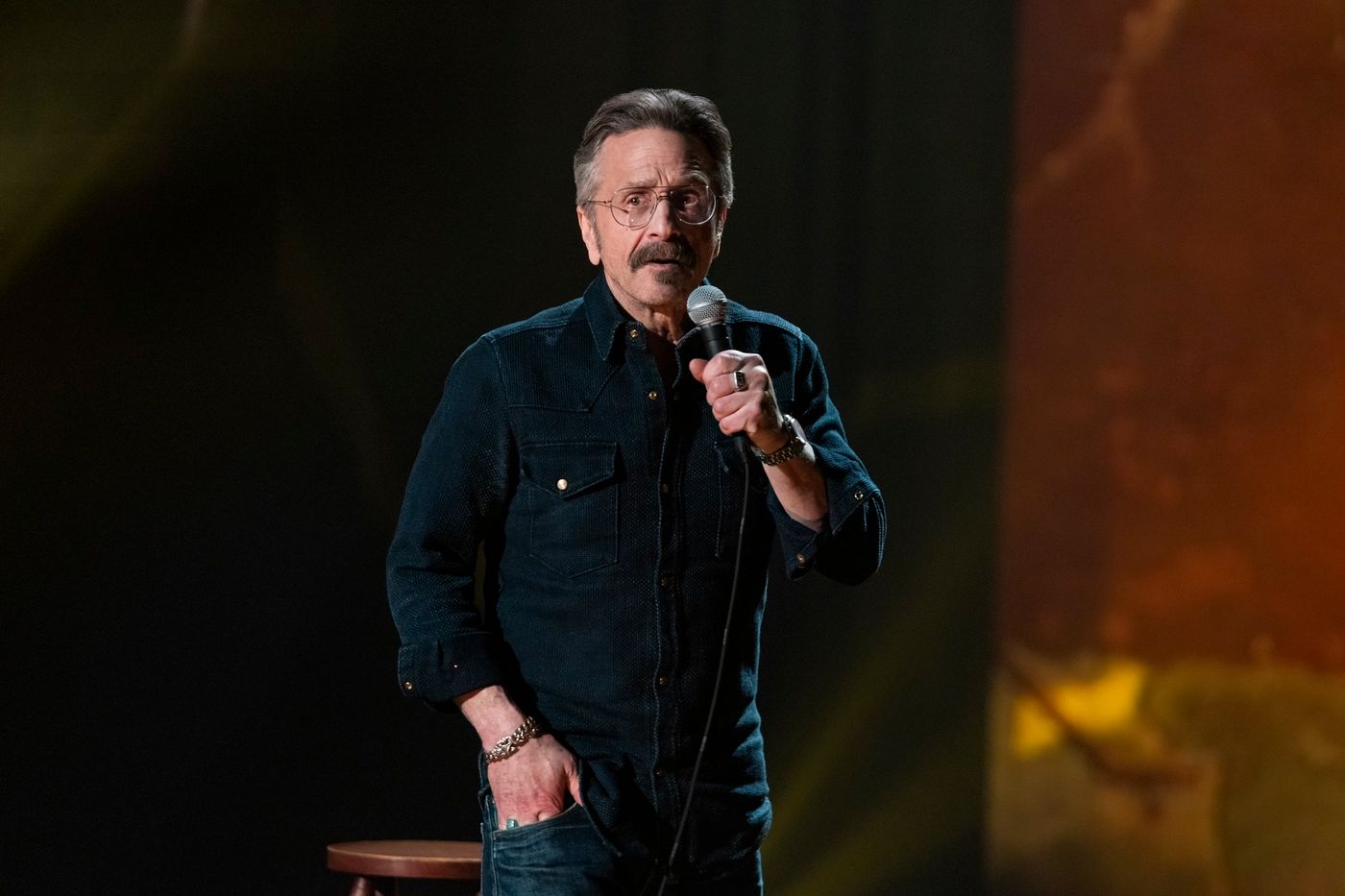
To start his sixth special, Marc Maron lays out all the things that are making him panic, much of it involving “this sociopathic huckster clown king” and his “army of shills and stooges and grifters, collaborators, unfuckable hate nerds, white nationalists, crypto dorks, wack-job Christian fascists.” Then, about a quarter of the way through, he reveals that he recently figured out what he’s supposed to do in these difficult times: “Why don’t you just, you know, try to be entertaining? People at this time could use some entertainment.” And that’s exactly what he does.
Maron’s past few specials might be more boundary pushing or emotional, but none are as purely fun as Panicked. The majority of the hour is built around a few long stories, in which Maron’s righteousness or worry end up being the butt of the joke. The best example is a 15-minute story about fleeing his house during the L.A. wildfires in early 2025 and trying to sneak his three cats in makeshift carriers into a hotel, only for them to shit all over the place. Paced like a farce, it all builds calamitously to the revelation that he was never in danger and, upon his return to his house the next morning, seeing his neighbors going to work as if nothing happened, because nothing did. It’s a freaking blast. But more than that, along with the story about his potential childhood molestation, it reflects the core of what Maron believes comedy is meant to do: make difficult times and subjects easier to talk about by making them funny. So, as the times get more and more difficult, Maron is going to get more and more funny.
Beth Stelling, The Landlord Special (YouTube)

For about 15 years, stand-up specials have been made to be released exclusively on the internet. Despite this, rarely do comedians release refined specials that are just the length of the one story they tell or main topic they cover. Kyle Kinane, for example, released the 72-minute special Dirt Nap last year that arguably would have been more impactful if it was edited down only to its virtuosic 50-minute centerpiece story about moving to the suburbs during the pandemic. Beth Stelling’s 28-minute The Landlord Special, on the other hand, is a testament to the power of letting the story define a special’s length and not the other way around.
Like Dirt Nap, The Landlord Special is a story about a living situation during the height of COVID. In Stelling’s case, it revolves around an awful, erratic, invasive landlord who ended up raising Stelling’s rent during the pandemic. I don’t want to spoil all the twists and turns, which, in Stelling’s style, are told subtly and completely undermine how big of a deal certain revelations are. At one point, this landlord, whom Stelling performs with an impressive annoyingness, barges in ten minutes before Stelling was going to tape a Zoom episode of a late-night panel show, and the two get into a fight, which is actually pretty intense out of context, but plays funny in the special because of the groundwork Stelling has already laid to make the audience hate her landlord. Stelling never makes some grandiose point about the indignity of renting in the 2020s or the pandemic, but her depiction is better for it.
There is a belief that specials should be a snapshot of where the comedian is at the time of recording, but often they’re a snapshot paired with odds and ends of some observations and bits. The Landlord Special actually is a snapshot, and by keeping it concise, it’s magnified. All Stelling is offering is a slice of life, and it is satisfying.
Joe DeRosa, I Never Promised You a Rose Garden (YouTube)

Right out the gate, it is clear that I Never Promised You a Rose Garden is a special with a vision for a distinct viewing experience. Menacing synths drone as Joe DeRosa, who also directed the special, shoots the marquee of the theater with some of the letters faded. The music intensifies and we see the back of his head as he sits in the empty theater and looks at the stage’s blood-red curtain. The screen cuts to black, with a title card reading in all-caps “I. Perspective,” letting the viewer know this thing is going to have freaking chapters. The intensity carries over to DeRosa now onstage, in extreme close-up, as he sets the tone: “This is an entirely negative show. There is nothing positive whatsoever. It is a hopeless affair from front to back.” Then, as he launches into his first bit about how he would spit on people if it weren’t a crime, there is an audience cutaway, but unlike almost every audience cutaway in stand-up history, the audience members aren’t laughing. Bleak stuff, but I love a big swing, and this seems like it’s going to be just that.
As the hour continues, it becomes clear the chapters are not random groupings of bits but the building of a thesis about why the world is doomed. There are a lot of great jokes in the special rooted in an unrelenting negativity, like one about how “First class sucks … but they make coach class so utterly shitty.” But there are also some rhetorical tics that make a lot of the material seem more arbitrary than edgy. Like an op-ed writer, DeRosa routinely builds widespread cultural critique on ultimately niche behavior performed online in a way that reminded me of my colleague Andrea Long Chu’s recent piece on complaints about wokeness: “It is not talking about nothing. But it is tricky to define social justice further without stuffing more straw into a straw man.” How many people are actually calling Pam Anderson “brave” for not wearing makeup, as DeRosa derides as a way of critiquing feminism, and for those who are, how many are just looking for words to make some online post more interesting than saying “It looks nice”? (Critiquing the overuse of “brave” in this way was also the premise of a Bill Burr joke over eight years ago.)
It would be one thing if the special were explicitly about the problems of social media, but, as is, this tendency gives a lot of the material a false-premise quality and, after a while, makes the hour feel monotonous. That is, unless you exactly agree with DeRosa on every issue, but that would undermine the central premise of the special that he’s a dark outsider uniquely able to see the culture for what it really is.
Vir Das, Fool Volume (Netflix)

There might be no stand-ups currently working who are better at directing their own specials than Vir Das, and Fool Volume is his most impressive work yet. After being forced to reconceptualize the special six weeks before the taping, when Das lost his voice and was unsure if he’d get it back in time, Das ends up breathing new life into two of the more common but usually misguided stand-up special concepts: documentary footage and cutting between multiple performances. As for the former, unlike docuspecials, in which documentary footage anxiously interrupts the stand-up for long stretches as if to prove the comedian is telling the truth, in Fool Volume it’s brief but highly affecting. When Das first introduces the idea that he lost his voice, it cuts to cell-phone footage of him using a kazoo, doctor’s office footage of inside his throat, him failing to move a tissue while blowing through a straw, and him with his head in his hands, as if these memories are flashing in Das’s mind. It’s less about showing the audience what these six weeks looked like than it is making them feel it.
As for the latter, Fool Volume is the best example ever of a special that cuts between multiple performances at different venues. It’s a convention that often makes a special feel impersonal and disconnected, but Das does something exciting with it by essentially introducing two timelines. There is “the special,” which are the shows filmed in England and India — as was Das’s initial plan before he lost his voice — and generally those performances tell one story about the power of the audience. Then there’s Das’s performance at the Comedy Cellar, in which he tells the story of losing his voice and what it took to film “the special.” Cutting between all three shows results in a uniquely sumptuous experience completely unlike the limited idea that a special should feel like a crew simply set up three cameras for a random tour gig. There are probably too many visual ideas in the special (at one point, Das turns the lights off, for example), and I wish the joke writing met the standard of the rest of the production. But with how many specials that are being made right now, I’d rather watch someone with too many ideas than too few.
Eddie Pepitone, The Collapse (Veeps)

Eddie Pepitone is upset. Sure, there are plenty of upset comedians, but what makes Pepitone such a compelling presence is not the breadth of his anger but the depth. A lot of his jokes start with a small grievance — usually at the intersection of tech, pop culture, and predatory capitalism — but quickly spin into a manifesto about God being dead. Take, for example, how The Collapse opens. Pepitone comes onstage with a big smile, but it instantly fades as he says, “Oh great! My Apple Watch is asking me if I’ve fallen.” Now he’s screaming at his wrist: “All of a sudden you care! Why? Because I didn’t do a certain metric!? I’m not in your fucking little algorithm, you stupid asshole! No, I haven’t fallen! It’s been one long descent into hell!” Most comedians would end it there, but not Pepitone, who spins off into a horrific fantasy you might expect out of some satirical, existentialist novel: “I was raised by two people who fed me through an eyedropper in a steel box with a pinprick hole, feeding me high-fructose corn syrup. And those were the good years!” And this is just the start!
Pepitone cannot be contained. At the end of the special, he does a bit he’s done for years where he heckles himself, screaming without a mic from the audience toward the stage. After a few minutes of yelling things like “Why do you dream about these little red birds attacking your throat at night!?” from the floor seats, Pepitone says, “I’m going to fucking heckle myself from the balcony.” This is followed by a jazzy-scored, Scorsese-aping shot of Pepitone climbing the stairs to do just that. It’s a fun, inventive moment, but thematically it underlines the feeling that Pepitone is busting out of a cage society puts him in.
Josh Gondelman, Positive Reinforcement (YouTube)

Instead of trying to break bad like some nice-guy comedians have recently, Josh Gondelman thoughtfully tries to find ways to make his niceness seem more complicated and not wholly positive in Positive Reinforcement. As he says near the beginning, “I’m friendly. It rarely helps.” In this case, Gondelman is referring to his tendency to overdo it with his texts when he drinks, but it’s an angle that materializes a few times in the special. The best example is a story in which Gondelman reveals that someone he used to date transitioned years later. He’s supportive and explains he is happy for the ex but also — and here’s the twist — maybe a bit too happy for himself. When someone recently asked him and this ex “How do you fellas know each other?,” Gondelman says, “Oh, he and I, we used to date.” “I don’t have any shame attached to saying that,” he tells the audience. “I just don’t know how proud I get to be.” Gondelman deliberately comes off as an ally but one who isn’t completely selfless, which is key when a comedian is looking for laughs and not claps from the audience.
There is something inviting to a comedian who puts this much work into his craft, and if you like your comedians clever and your words played with, you will be very happy with Positive Reinforcement. For example, when comparing what one gets for $900,000 in the New York real-estate market with how he viewed that amount of money as a child, Gondelman says, “If when I was a kid you’d been like, ‘Josh, I’m going to give you $900,000 when you grow up, what are you going to do with it?’ I’d be like, ‘Well, right off the top, fleet of pirate ships.’ No doubt about it ’cause you get your money working for you once you’re pillaging and plundering — get all that stuff up and running. Work smart-arrr, not hard-arrr.” Conversely, there surely will be audience members who find some of the punch lines too cute or writerly, but that all fits into the special’s goal of not being blandly for everyone. If too many puns bothers you, that’s your problem.
Steph Tolev, Filth Queen (Netflix)
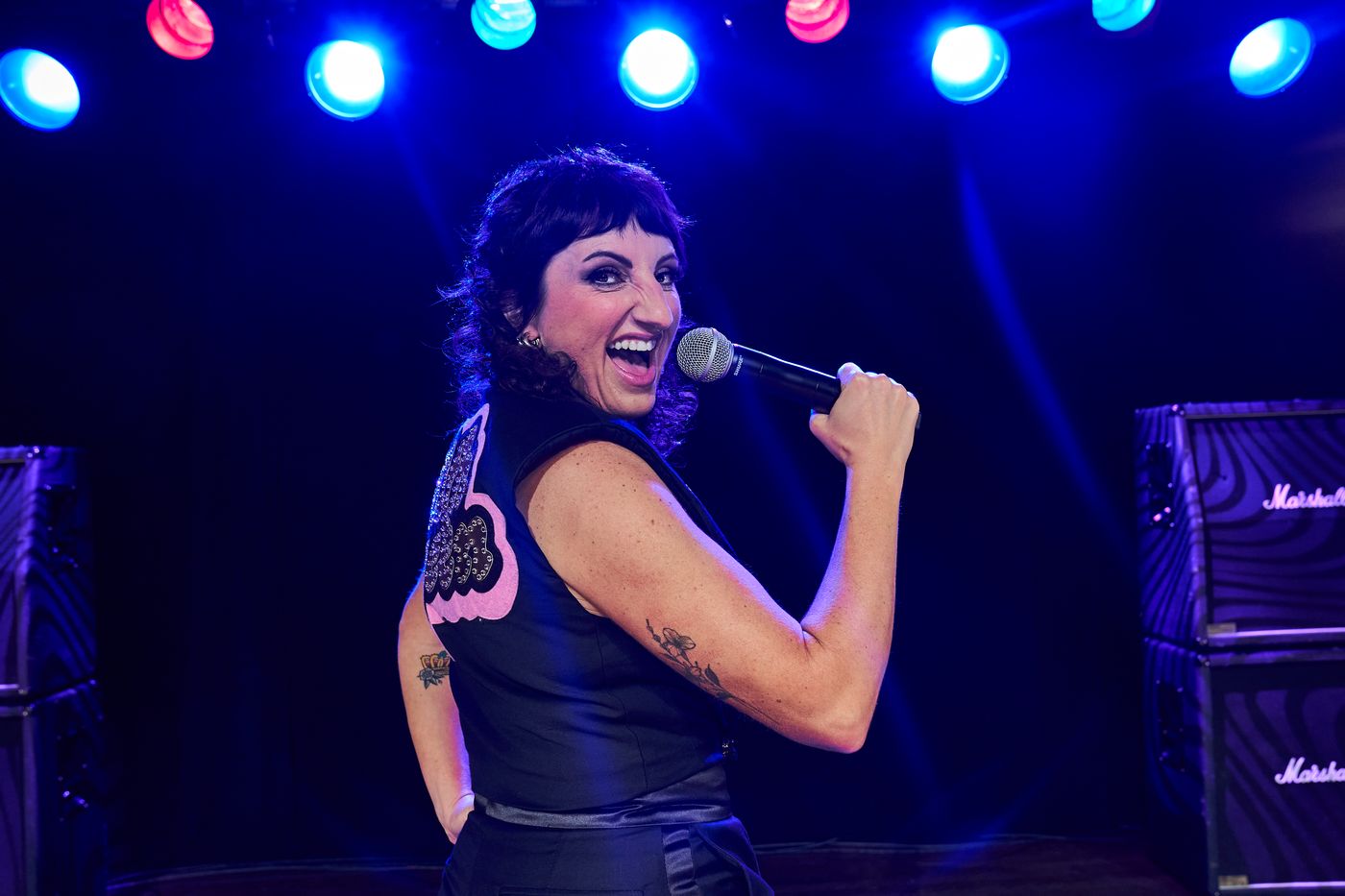
Filth Queen is exactly what I hope for in a debut hour: a new, distinct perspective with the skill level to back it up. Part of what makes Steph Tolev’s comedy unique is her literal voice, which sounds like Sebastian Maniscalco and Tim Robinson had a baby and it was a female gremlin. Then there’s her onstage persona, which I’d describe as a feral wolverine with the soul of a poet. Through this uniqueness, Tolev shines with jokes about dating, sex, and human anatomy that are both visceral and fanciful.
There is a section about taking nudes that is much more thorough than any comedian who has touched the subject. At first, Tolev blames the lighting, saying her first attempt at photographing her vagina was backlit: “Spooky stuff. Shadowy. Cave-like. Almost as if a fog was gonna roll through at any moment, and a weary traveler’s gonna come by.” Then she says she tried to use a ring light: “Too much lighting! Looked like my pussy was trying to escape a prison on a back wall.” When a friend tells her that her vagina would look younger if she shaved it, Tolev responds, “Uh-oh! Opposite! Weathered old gal, huh? Haggard old thing. Looks like something you find in a maritime museum, you know? Like an old piece of a ship that just washed up on shore one day.” That’s poetry, baby.
This section features some particularly organic crowdwork, at a time when the craft of crowdwork has been cynically and opportunistically exploited for social-media views. Tolev engages her audience about their nude-photograph techniques in a way that brings them closer to her and makes the act feel more conversational. There is one interaction where she asks the guys in the crowd what angle in which they take dick pics, and one says underneath. “Underneath!” Tolev exclaims. “Balls in!? Ew!” She then turns to the audience and says, “We don’t want balls in, do we, ladies?” Every woman instantly shouts “No!” together, as if this were Tolev’s catchphrase she’s been touring with for years. It’s electric stuff.
Ali Siddiq, Rugged (YouTube)

Obviously, it’s a loaded comparison, but it’s hard not to see Bill Cosby in Ali Siddiq’s masterful ability to pace and perform comedic stories. There are essentially two ways in which stand-ups build comedy into stories. One way is to use every detail as an opportunity to write a proper joke; the other way, which is more difficult and what Siddiq tends to do, is to establish the comedic game of each character early in the story, almost like a sketch, so that the audience is in on the joke from the start. Rugged is a lighthearted, almost goofy special, filled with silly act-outs and self-deprecating stories that make fun of Siddiq’s own inability to fix things. In one story, about getting into a fight to defend his friend Dre, Siddiq tells the audience early on that Dre is six-foot-four and 360 or 365 pounds — “he fluctuates.” Then every subsequent time Siddiq brings up Dre, he reiterates these stats verbatim, building to the climax of the story where Dre is so scared of a man bigger than him that he tries to hide behind Siddiq, who is five-foot-seven.
Over the course of the hour of jokes about home improvement and altercations gone wrong, a theme subtly emerges. By the end, when Siddiq explains to his daughter why he didn’t get into a fight in the Walmart parking lot, it becomes clear that the special’s main focus is masculinity — specifically the difference between what it means to be a man and what is perceived as manliness. Unlike Cosby, Siddiq is never didactic with his message, but he is poignant. While he undercuts his status throughout Rugged, Siddiq knows exactly when to pick the spots to use his hard-earned gravitas to speak directly to the audience.
Atsuko Okatsuka, Father (Hulu)
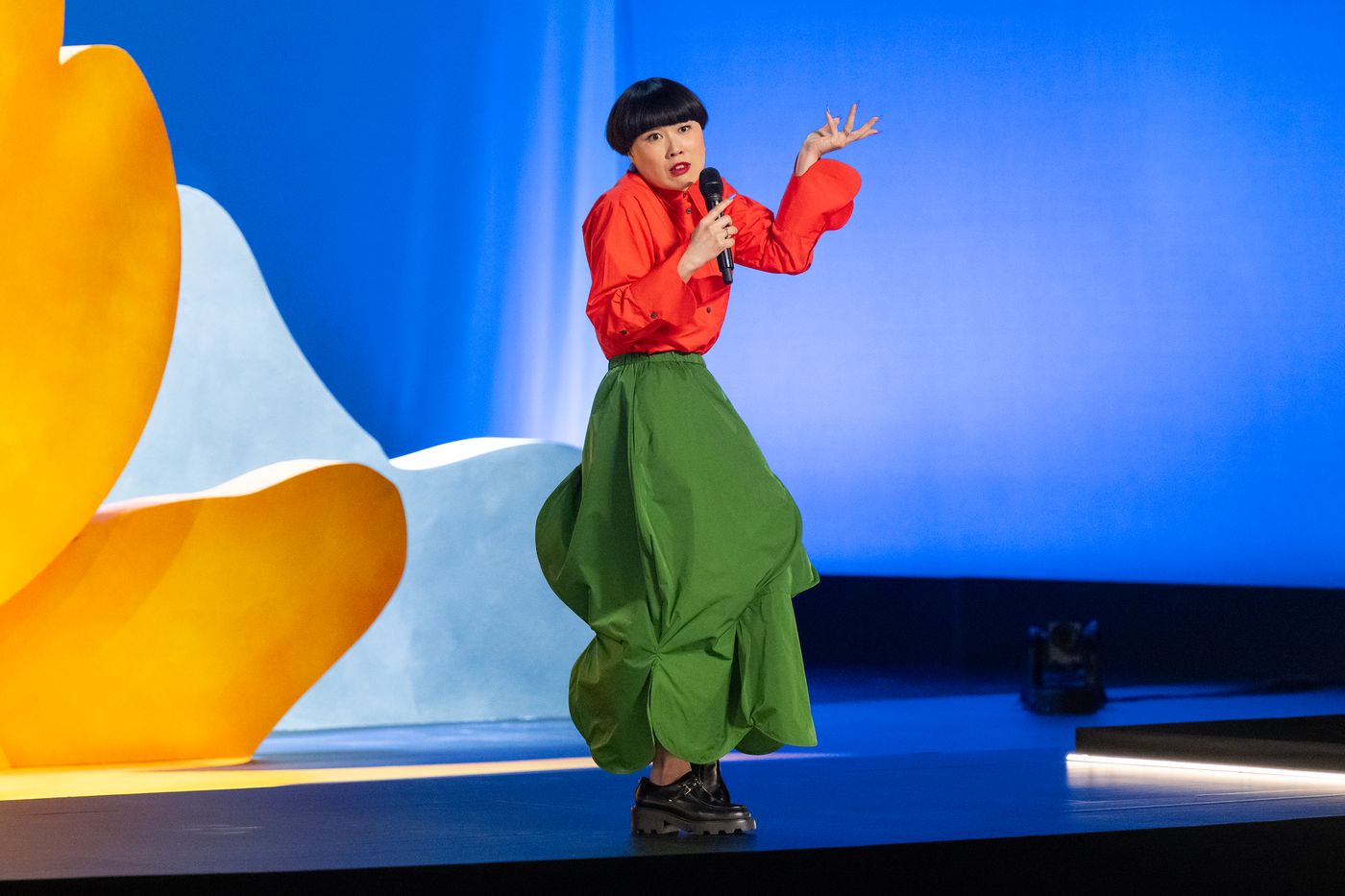
Father is a very rare special that is enjoyable to watch with the sound off. Most comedians don’t move in interesting ways, and in the select specials where they do, the direction and set design are often lacking. Atsuko Okatsuka is a dancer who grew up admiring physical comedians like Lucille Ball before she learned how to speak English, and as a result, her movements onstage feel purposeful, lyrical, and impressionistic. The special’s director, Ryan Harper Gray — Okatsuka’s husband, close collaborator, and frequent stand-up subject — is a painter, which results in design language that is both attention-grabbing and thematically rich. The set depicts an abstract rising sun, and Okatsuka, whose angular outfit brings to mind Umberto Boccioni’s famous Italian Futurist sculpture Unique Forms of Continuity in Space, looks like a tulip fighting to receive the sun’s light. At its core, that is what Okatsuka’s comedy is about: an existential fight for joy in the face of looming darkness.
Of course, please also listen to the special. Okatsuka writes well-structured bits that waver between a kooky deadpan and whimsical flights of fancy. Father opens on a strong, surprisingly long section about wanting to get a tandem bicycle for her and her husband. “It’s a special bond,” she says about the beauty of the tandem-bike relationship. “If you fall, they fall. There’s no ‘I’ in tandem.” One other benefit of the tandem bicycle is, she says, is that “no one’s ever getting left behind ever again.” It’s a small line, but as the hour unfolds, it becomes the emotional core of a special that covers the codependent nature of her relationship with Gray and how her grandmother kidnapped her from her father growing up, moving them and her mother to America. Unlike her breakthrough special The Intruder, which had a satisfying but sometimes forced framing device, Father benefits from the complex, more abstracted way it tells Okatsuka’s story of searching for, remixing, and finding a family structure that works for her.
Jim Norton, Unconceivable (YouTube)

For most of the first half of Unconceivable, Jim Norton makes jokes and tells stories about his three-year-old marriage. For example, there is a chunk about how gross the food is in his wife’s native country of Norway, a chunk about how bad she is at telling stories, and a chunk about how he likes it to be ice-cold when he sleeps while she likes it very hot, all told with his brand of acerbic yet sweet specificity: “Do you understand the rage you feel when you wake up stuck to the sheet wet and 78 has been set on the thermostat and she’s comfortably asleep? You want to put a pillow on her face and staple it around her head.”
Structurally, Norton is playing a very clever game with his audience that reveals itself with a joke about how his wife wanted to have kids. “We tried, you know,” he says as half the audience starts laughing. “She’s like, ‘What’s wrong?’ I’m like, ‘I don’t know. We’re going to keep trying.’ Battery of tests, and the doctor finally broke it to us: ‘We’re sorry, but her dick — it’s not going to happen.’” Norton adds, “I always know who’s familiar with my life by where they start laughing in that joke,” referring to the fact that his wife is trans. For those unfamiliar, the joke is in the confrontation of one’s own preconceptions, while those familiar get to laugh at the first group’s naïveté. Coming from the more transgressive side of comedy, this is Norton’s way to drive home the point that trans women are women, or, as he puts it, “My wife’s penis really is the only difference between her and other women I’ve dated.” Besides the brief moments where Norton feels the need to preemptively defend his comedy from straw-man social-justice warriors, Unconceivable shows the actual value of transgressive comedy in its ability to confront biases, demystify taboos, and expand understanding.
Joe List, Small Ball (YouTube)

Joe List is very good at writing jokes. He takes strong angles, finds all the comedic nooks and crannies of premises, always escalates the comedic games, and writes concisely. In his past specials, more of the comedy came from List looking inward and telling self-deprecating jokes about his own neuroses, but Small Ball is largely made up of somewhat pedestrian observations and interactions from his everyday life. One strong joke starts with List giving his 10-year-old niece $50 for her birthday, which sets him off on the idea that kids love money: “Did you know that capitalism is built into the souls of American children?” Then he moves to the fact that, despite their love of it, he’s never seen a kid ever actually use money: “You ever go out to eat with a kid? They’re never been like, ‘Put your wallets away. Let me get it.’” He adds, “I’ve never seen an 8-year-old girl be like, ‘What’s 20 percent of 49? I want to take care of the lady.’” Soon after, his wife suggests giving the niece $100 for her 11th birthday. “I’m not doubling it every year,” he says. “Can’t set that precedent. Her 18th birthday, I’ll owe her $16,500.” The joke continues even further, with List considering the ramifications of getting her gift cards to her favorite restaurant. It is really satisfying as a viewer to watch a comedian so thoroughly exhausts a premise. You feel taken care of, like the comedian has given you a gift.
That said, I wish as much care were put into considering the special as a whole. The way Small Ball cuts between two different shows, performed on different nights at different venues, is unnecessary at best and distracting at worst. Without a clear thematic reason to shoot the special this way, it creates an overall feeling of detachment, like each joke is freestanding and not part of a cohesive show. List comes off overly guarded onstage, which often makes the tightness of his writing feel like a defense mechanism. There is a section, for example, where he talks about being with his wife as his child was born: “I was crying. She was crying. We were both crying. It was very beautiful. We said ‘I love you.’ And I don’t want to get too into it. It was private.” It’s a funny way to subvert the expectation that comedians be vulnerable onstage, but it also underlines how not being vulnerable is so built into List’s persona. It works for jokes and sets at a comedy club, but when asking people to watch an hour-long special, vulnerability makes it feel more exciting and human and less like the product of some sort of cyborg joke machine. But, hey, the jokes are good.
Mike Birbiglia, The Good Life (Netflix)
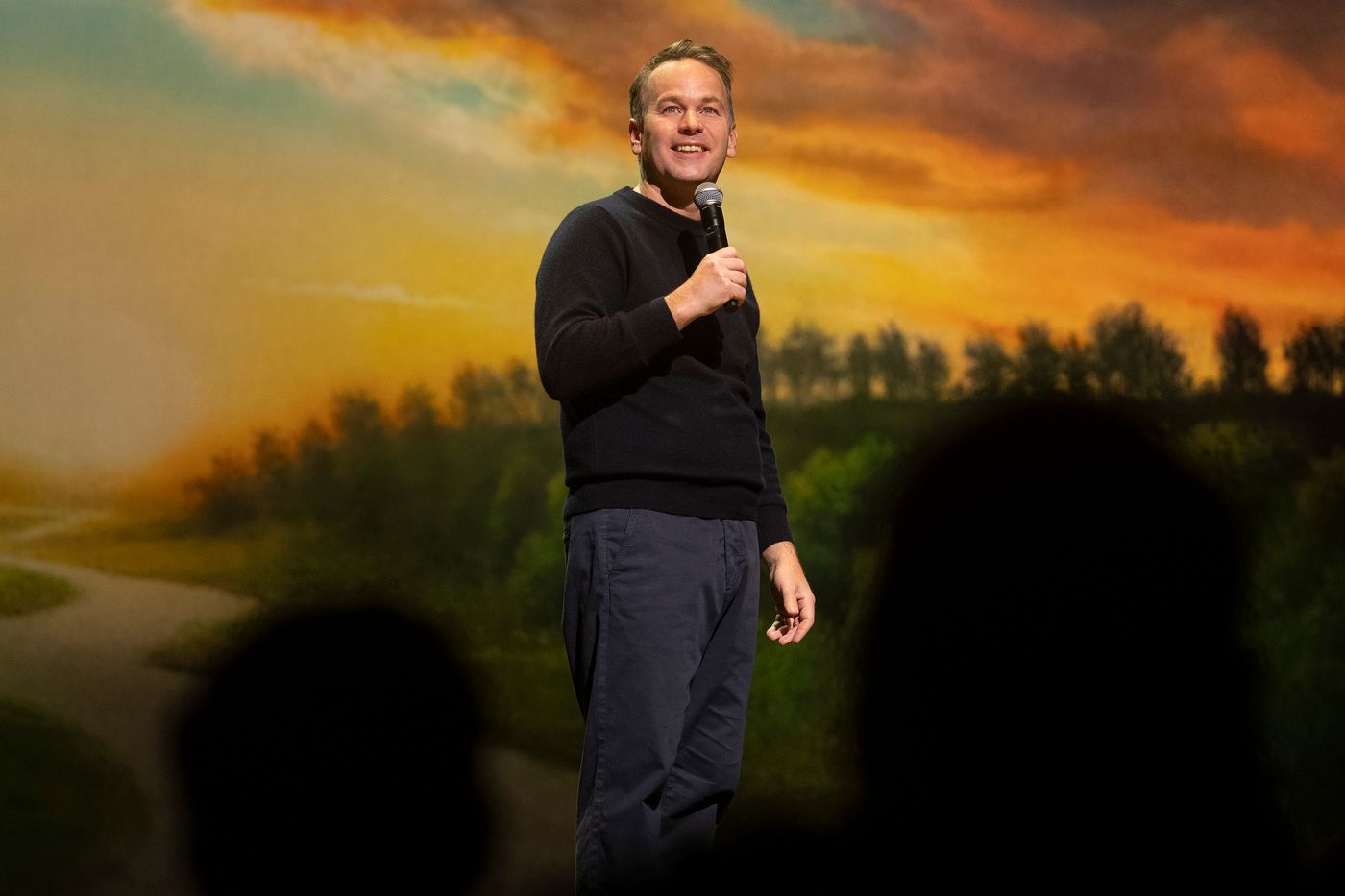
The Good Life is a good Mike Birbiglia special, which means it is great. The special focuses on the comedian’s inquiry into what makes a good father, husband, and person in the wake of his own father having a stroke. On display is Birbiglia’s mastery of not just telling a story but sequencing one. Where most one-person shows follow a predictable This happened, and then this happened narrative structure, Birbiglia’s shows don’t adhere to a strict linearity. In The Good Life, seemingly as a metaphor for life, he contrasts harsh and sweet material so that the touching moments come as a relief. Like all his specials, there are a lot of bits and shorter stories that break off from the main narrative. There’s a section about kids’ birthday parties and wanting to sue a Brooklyn trampoline park where his daughter got injured, for example, but unlike lesser one-person shows that see comics sweatily shoehorn whatever material they have into the story, Birbiglia does the work that makes every element feel integrated and cohesive.
There’s a moment early on, however, that breaks from what is expected from a Birbiglia show. After talking about how his father valued his work as a doctor more than being a parent, Birbiglia says that, while growing up, people would tell him his dad was a great doctor, to which he replies with a shrug, “He’s not my dad” when he meant to say “my doctor.” “That was Freudian,” he says. “I don’t know if that will make it into the special.” Birbiglia’s specials tend to be incredibly precise, so there’s something thrilling in him telling these stories in a way that feels so off-the-cuff. At a moment in stand-up when more and more American comedians are attempting one-person shows, Birbiglia is out here creatively lapping these children. The Good Life is a top-three Birbiglia special, which is saying a lot considering the catalogue.
Jerrod Carmichael, Don’t Be Gay (HBO/HBO Max)

Judging from the press response that followed, the fact that Jerrod Carmichael came out as gay in 2022’s Rothaniel overshadowed the fact that he is a very skilled stand-up comedian. And if someone thought Rothaniel was compelling but wondered why there weren’t any jokes, well, do I have a special for you. Don’t Be Gay sees Carmichael returning to a form closer to his 2014 debut, Love at the Store, where he exhibits a Chappelle-like ability to build extended set-ups only to subvert the tension with an edgy punch line. Don’t Be Gay, for instance, opens on an extended reflection on the negative feedback he received for his 2024 HBO series, Reality Show, and him wondering if he has an inferiority complex to white people that ultimately builds to him using the R-word.
The difference between Carmichael then (and Chappelle over this past decade) and Carmichael now is he no longer is trying to be edgy about outside subject matter as a way of distracting from his personal life. He’s trying to be confrontationally honest about himself, which materializes in him mostly talking specifically and frankly about his sex life. There are jokes about how he has sex with his boyfriend (like the Huxtables) and how he has sex with strangers (spitting in their mouths like he’s feeding a baby bird). Don’t Be Gay feels less like a cohesive piece meant to convey a specific story about Carmichael and his relationship to the audience than 8 and Rothaniel (both directed by Bo Burnham; Don’t Be Gay is directed by Reality Show’s Ari Katcher), yet it does feel more revealing. At first, the special’s most vulnerable aspect is how open Carmichael is about his sex life, but as it unfolds, the true vulnerability is Carmichael exposing the depth of his internalized homophobia. 8 experimented with pushing the audience away with distance, and Rothaniel experimented with bringing them in for love and support. Don’t Be Gay is a test to see how far he can push the audience away and still have them love him.
Brent Weinbach, Popular Culture (YouTube)

When it first emerged in the ’90s, the term “alternative comedy” was generally defined by one of a few stylistic delineations. Broadly speaking, it involved some amount of confessional storytelling, aggressive political comedy, and conceptual silliness that usually commented on the comedy itself. While the former two elements have been thoroughly embraced (and often watered down) by mainstream stand-up, there aren’t many comedians these days filling sets with high-concept bits. This is the context in which Brent Weinbach released Popular Culture, a special filled to the brim with exactly that.
Popular Culture is made up of a series of impressions of abstract ideas and inventive archetypes like This is my impression of a face that doesn’t match what the person’s saying, but it actually does match after all and This is my impression of a man who says the word “Rocktober” but doesn’t make a big deal out of it —in fact, he doesn’t even realize that the word “October” exists. That said, the special’s best bit does involve a celebrity impression: Midway through the hour, Weinbach asserts that Michael Jackson actually snuck the F-word into all of his songs, and he can prove it. The absurdly simple bit that follows lasts over ten minutes! There are probably people who would have a problem with this, arguing that it isn’t funny and goes against stand-up’s job of telling jokes. But Weinbach is of the Steve Martin school, always looking for new structures of comedy and ways to make an audience laugh. Maybe this sounds like stand-up for comedy nerds, but with so many specials on streaming and stand-up clips on social media, it might be refreshing to anyone looking for something different.
Sarah Silverman, PostMortem (Netflix)

2025 marks the 20th anniversary of Jesus Is Magic, Sarah Silverman’s revolutionary concert film, which showed her at the height of her deeply ironic persona that influenced generations of comedians that came after. Considering where Silverman came from, PostMortem is fascinating in its extreme earnestness. The special is mostly comprised of pleasant stories about the comedian’s deceased parents. They’re not as funny as audiences have come to expect from Silverman, but they also aren’t maudlin or cheaply emotional. Touching, nostalgic, and surprisingly breezy, PostMortem often feels like Silverman flipping through a photo album of her life.
In the Jesus Is Magic era, Silverman masterfully used sweetness to help sell her saltiness; PostMortem achieves something with the inverse. Whenever things feel a bit too heavy, she tosses in little jokes that remind the audience this is a comedy special. Toward the end of the special, when she recaps her father’s final days, she tells the story of him mustering the energy to say, “I changed my mind. I want to live,” which made Silverman’s rabbi sister, Susie, gasp in the moment, causing Sarah to say, “Susie, he’s fucking with you.” Sarah then tells the audience that after seeing a show earlier in the tour, Susie told her, “Are you kidding me? You were the one that gasped, and I was the one that told you he was fucking with you.” Silverman then tells the audience, with a Bugs Bunny smirk, “I had to explain to her that, like, that’s not who she is in this.” PostMortem is hardly Silverman’s best special — that would still be 2017’s A Speck of Dust — but it’s a compelling addition to one of the most important catalogues in stand-up history.
Ali Siddiq, My Two Sons (YouTube)

How does someone follow up a project like Domino Effect, Ali Siddiq’s monumental series of specials that capture his first 25 years of his life, from the upbringing that led to him selling drugs to his arrest and six years in prison? With My Two Sons, Siddiq is as ambitious as ever but working on a much smaller canvas. As the title suggests, the special is about Siddiq’s two sons — one who grew up before his financial success, and one who grew up after — but it is really a portrait of Siddiq himself and how he’s grown since his days as a “street-pharmaceutical rep.” As always, he’s a master at telling long, serpentine stories packed with insight, heart, and humor, without the need for cheap jokes to make sure the audience is paying attention or clunky editorializing where he spells out the meaning of the events.
The best story is the one that opens the special. Siddiq sets it up by saying that, since he’s 50 years old, that means he should have had his last fight. But he recently got into one after saying the wrong thing to a 29-year-old … who turns out to be just Siddiq telling his son to take the trash outside when he left the house one day. It’s a thrilling misdirection that brings stakes to an otherwise common subject area of having kids. He then tells an over 20-minute story about a boxing match they had, which captures how each man’s relationship to fighting reveals who they are at this moment in time. A lesser comedian might be worried about an audience’s investment when the stories don’t involve crime and the prison-industrial complex, but Siddiq isn’t a lesser comedian. He knows that it’s not about the song, but the singer.
Brett Goldstein, The Second Best Night of Your Life (HBO/Max)

Brett Goldstein’s situation is unique. He performed stand-up for over a decade in England — in the British style of working toward an hourlong, narrative Edinburgh show every year — to little fanfare. But then, thanks to Ted Lasso, he found himself performing in the U.S. to large theater audiences who didn’t know what to expect from his act. Seventeen years into stand-up, The Second Best Night of Your Life is Goldstein’s first special, and it feels like the manifestation of reconciling all of this history. It’s structured like a classic American stand-up special with some shorter getting-to-know-you jokes at the top (which, for Goldstein, cover his newfound fame and being British in America), then some longer stories and bits in the middle, and then ending on sex stuff.
Goldstein is the strongest in the middle, where he’s afforded more space to tell longer stories and have more flights of fancy that are more typical in British comedy. There is a great section about how he loves musicals but hates plays that includes a bit about seeing “Hamlet or Macbeth, couldn’t tell you which” (a phrase he repeats over and over because “they’re both gibberish”) and experiencing the audience actually laugh at a line in the play. And Goldstein gets furious! It’s a fun move that will tickle anyone turning in to get some of that Roy Kent magic. It’s in these moments that you feel the sum total of Goldstein’s experience — British stand-up, American stand-up, Ted Lasso, etc. — and the result is a voice that is uniquely his own.
Jessica Kirson, I’m the Man (Hulu)

After grinding it out in clubs for years, Jessica Kirson started gaining attention on social media two years ago for her crowdwork clips. Nothing against her crowdwork, but her true mastery is in the club-comedy art of layering punch lines and tagging jokes. It’s a skill she employs relentlessly: She squeezes and squeezes and squeezes until the premise, and the audience, is exhausted. While talking about her vibrator, for example, she says, “You know, a lot of women are like, [high pitched, nasal voice] ‘I bought a new vibrator. It’s purple. It’s amazing. I deserve it.’ My vibrator, it has pieces missing from it. I’m serious — they’re inside of me. I have more plastic inside of me than the Pacific Ocean. It’s that Magic Wand. Enormous. Like a jackhammer. It is so powerful. Did you know I dropped it the other day, and my neighbors got an earthquake warning? I also use it as an immersion blender. So it’s very helpful. I make split-pea soup with it. That’s my merch. Split-pea soup. I sell it after my shows.”
That’s like 15 to 20 laugh lines on the premise of having a powerful vibrator and, not for nothing, the joke keeps on going from there. She isn’t just getting the quick laugh of a surprise twist but building more and more laughing energy. To be in her audience, it feels like everyone is in a pot of water about to boil over. Obviously something is lost in the translation from live to filmed performance, but thankfully Kirson is a dynamic performer who slips into different voices, faces, and impressions that make it hard to look away.
Zach Zimmerman, Surprise Me (YouTube)

Surprise Me is a very good name for a comedy special, especially one that combines stand-up and magic. The title is a nod to an early standout joke from the hour about how the Dunkin’ app features the option to choose “Surprise Me,” which is mostly used as a way for a store to get rid of stale doughnuts. The title also suggests being taken care of, and Zach Zimmerman’s material is written with care and clarity. There’s something charming about how happy Zimmerman is to share the many, many jokes he worked so hard on. Like this section on being tall: “It’s exhausting being this tall. Do you know how much energy it takes to animate this body? Truly, I do a sit-up, I’m like folding the Eiffel Tower in half. Like those little French bulldogs. Okay, hear me out: We’ve been bred to look like this, and it is hard for us to breathe. I’m chopping vegetables on regulation countertops like [wheezes heavily]. I want you know, I want to use a downstairs bathroom and not get a concussion. That would be nice. I’d like to raise my hand and not tickle the feet of God. Could that be arranged? I want to talk to a short person and not turn into an umpire.”
Thematically, the special’s title is central to the fundamental question Zimmerman attempts to answer in the hour: What is the meaning of love? In the triumphant closer, he tells the story of his failed attempt at becoming a Christian magician that builds around him performing a card trick, and in the (very, very) long delay before he reveals the volunteer’s card, he says, “Love means giving someone a chance to surprise you.” Surprise Me is a YouTube special, so it doesn’t have the big production budget of the streamers’ specials, but in its ambition, it is genuinely surprising.
Cameron Esposito, Four Pills (Dropout)

At the start of Cameron Esposito’s fourth special, she regales the audience with stories of rescuing a dog and tearing her own butthole in her signature high-energy style. She’s as effortlessly charismatic as always, yet as the special goes on, it’s clear some things are different. She is sitting down, she has her notes onstage, she stumbles over a word or two, and her pace has slowed. Then, 37 minutes in, the edit glitches and cuts to Esposito in an identical position but now alone and in a white room. From that point forward, for Four Pills’s more somber last third, Esposito (who also directed the special) continually cuts back and forth between both sets as she tells the audience about the behaviors that led her to check into rehab and get diagnosed with bipolar disorder. She details how she’s grown since then, including the medication that fundamentally altered her performance style. Watching the end of the special, it becomes clear how ingeniously the entire thing is built. Esposito doesn’t just tell the audience how she’s changed since she started taking the titular four pills; she shows the audience, too. She delights them with the manic behavior that made her such an exciting onstage presence before conveying why it couldn’t last.
Esposito hasn’t released a special since 2018’s Rape Jokes, and in the seven years since, there have been a lot of specials that deconstruct the stand-up special and/or focus on mental health. But like Rape Jokes did with the topic of sexual assault and the language around abuse, Esposito approaches Four Pills with uncommon grace. She doesn’t bluntly call attention to what she’s doing differently or the bravery of revealing her issues. Instead, she invites the audience into her story and lets the hour’s brilliance slowly reveal itself.
Chelsea Handler, The Feeling (Netflix)

After opening with a few minutes of thanking her gay fans, Chelsea Handler spends the vast majority of The Feeling focused on two stories. As the author of six autobiographical best sellers, Handler is adept at laying out stories with perspective and voice, even if she, too, often falls back on saying “Let’s go!” or “Let’s fucking go!” where a better punch line should be. The first story is an impressive depiction of her early life. Instead of following a single linear narrative, she jumps around to different moments between when she was born and her tween years. She masterfully balances the naïve perspective of her as a kid with her snarky, bawdy comedic voice. There’s a section, for example, about when she learned how to pleasure herself at a friend’s sleepover when she was 8, where all the girls were face-down in their sleeping bags similarly proto-masturbating. “I showed up at that sleepover at 7:30 and I didn’t get up from that position until 7:30 a.m., when Jodi’s mom tapped me on the shoulder and said, ‘Honey, we’re gonna need you to leave,’” Handler tells the crowd at the Wellmont Theater. “I left that sleepover, I had rug burns on my forehead. I was so thirsty and dehydrated from sweating so much into my pajamas. I was like, ‘Does anyone have a Capri-Sun, please?’”
The second story — about trying to have sex with Andrew Cuomo and trying not to have sex with Bill Cosby — is less inventive but undeniably juicy as hell. When they get famous, a lot of comedians dishonestly underplay the celebrities in their stories, acting like they are just a regular person talking about their regular friend and/or sexual partner. Handler always plays up the gabbiness in a way that respects her audience’s intelligence.
Bill Burr, Drop Dead Years (Hulu)
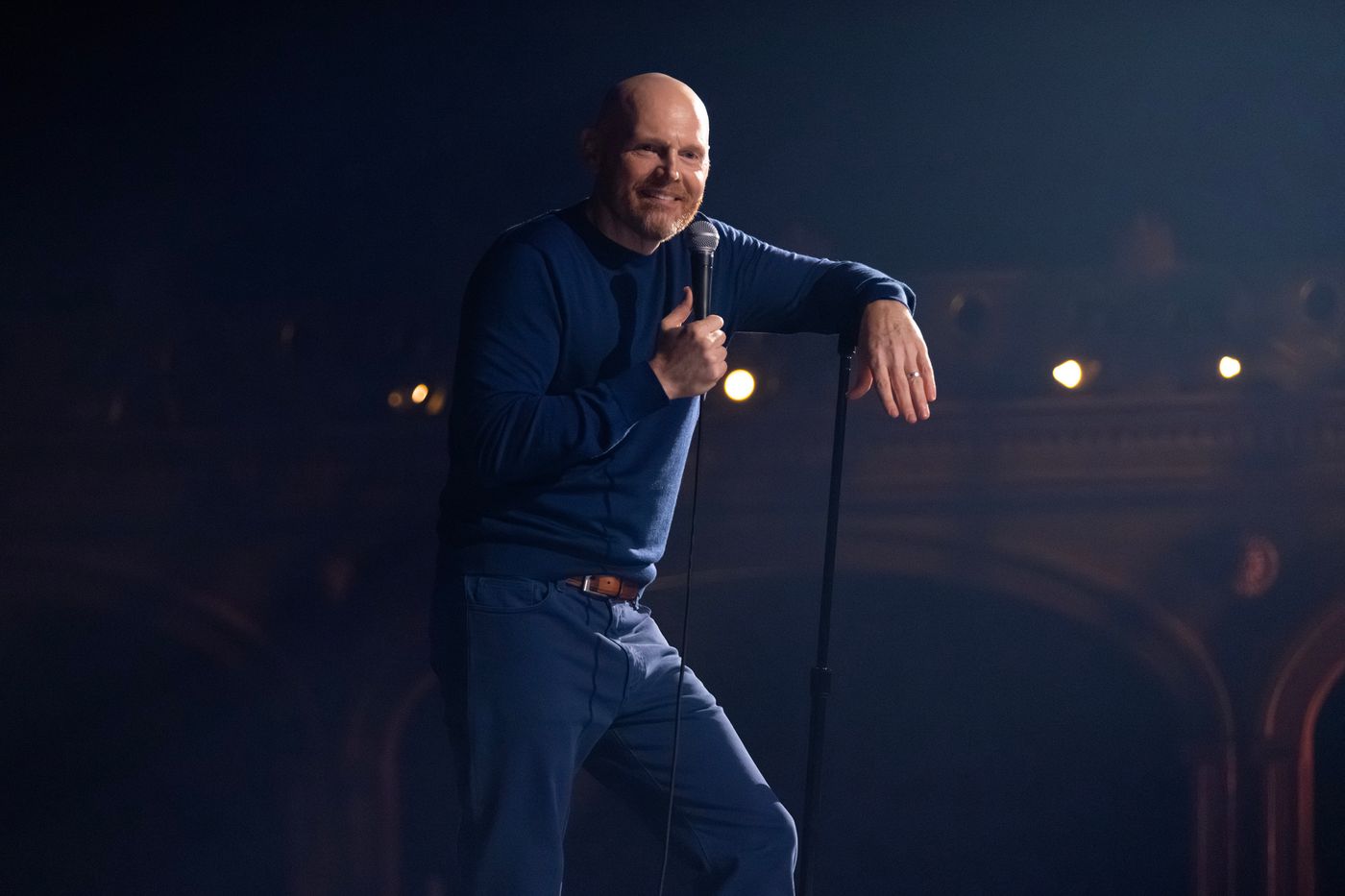
Forget “the best stand-up working right now” — Bill Burr is fighting to be in the conversation of greatest stand-ups of all-time. That demands artistic evolution and, in an autobiographical medium like stand-up, personal growth. (Not going to therapy is hack.) As such, Drop Dead Years feels like a major leap in both categories. The best example is a section about how Burr improved his relationship with his wife after attending a friend’s funeral and having the profound realization that his wife “agreed to spend her life with me, and I’m being this curmudgeonly asshole, and I’m kinda ruining, a little bit, the one life she has.” So Burr decides to try to be more agreeable, and what follows is a portrait of his relationship, with all its built-in assumptions and resentments, that results in some of the most intensely personal material featured in a special in years. Burr shares a few examples in which his wife asks him to do something, assuming he’d say no or complain as usual, but instead he just says yes. With each example, the tension builds: When is Bill going to snap like he always does? But the harsh right turn never arrives. Instead of the instant gratification of a man breaking down for our pleasure, Burr presents something genuinely surprising and touching.
This is not to say Burr has gone soft. Artistic evolution and personal growth are difficult when you’re a successful comedian and know there is a portion of the audience who wants you never to change. It’s easy to lose audience members by being too offensive; it’s much harder to risk losing them by being honest with who you are now as a person. Burr is not self-righteous or self-pitying, and with each new special, his audience gets to see a man at war — a man fighting to grow despite all the societal, cultural, financial, and familial forces working against him. And with each special, he keeps getting better.
Ian Smith, Crushing (YouTube)

Thanks to the recent boom in YouTube specials, the platform is awash with international comedians. As a result, every month a few shows that ran at Edinburgh Fringe Festival get uploaded, making it clear that a lot of these shows aren’t that good. That said, Crushing, which was nominated for the main prize at 2023’s Edinburgh, is good. While it might not be as narratively or conceptually ambitious as his fellow nominee Julia Masli’s much-publicized Ha ha ha ha ha ha ha or the eventual winner, Ahir Shah’s Ends, Smith’s hour of silly, exacerbated storytelling is worthy of its accolades.
Smith succeeds because he doesn’t worry about translating his Northern England cultural specifics to a potential international audience, as the specificity of background underlines the specificity of how his brain works. (“I come from a little town called Goole,” he tells the audience. “If you don’t know Goole, it’s just a stone’s throw from York, if you throw that stone onto a two-hour train.”) But more than that, Smith is fluent in the universal language of faux exasperation, which is on display in a story about a hotel manager downgrading his room because the man in the room before him shit in the bed and interacting with the hotel manager who told him this. (“I’m a new customer. I’m coming into your workplace for the first time. Don’t say ‘shit the bed!’”)
Some viewers might like the Edinburgh solo-show tick of stating outright what the show is “about” — in this case “stress” and the jokes you tell when not talking about the breakdown of your engagement — but personally, I find it unnecessary at best and, at worst, an oversimplification of what could be a multilayered, paradoxical work. It’s not a particularly distracting tick in Crushing but something that should be considered as more and more Edinburgh shows get turned into filmed pieces.
J.C. Currais, Cat Daddy (YouTube)

A minute into his Don’t Tell Comedy half-hour special, J.C. Currais tells the audience he used to be on a Disney Channel original series, and it makes perfect sense. It’s not that Currais has a juvenile sense of humor but that he is friendly and able to go big in a way that feels cartoonish yet organic. There’s a joke, for example, where he tells the audience it’s time to turn off no-contact delivery on the food apps. It’s an admittedly generic area to joke in, but for Currais, it sets up an act-out of him “right on the other side of the door, just standing there, looking through the peephole like a little food goblin.” He hunches, impishly bops around, and with a voice that will surely one day be cast as a troll in an animated movie, he says, “Yes, put it on the dirty ground. I’ll eat it from the dirty ground.”
While Currais too often finds himself in familiar comedic territory, the comedy instantly feels exciting and specific to him once he does a voice or physical movement. And with Cat Daddy just being a half-hour, the problems don’t deter from Currais’s good vibes and animated act-outs. Equal parts bighearted and lighthearted, the appeal of Currais’s low-stakes silliness is almost primal, whether you are 4 or 44.
Andrew Schulz, Life (Netflix)

In Andrew Schulz’s first proper Netflix stand-up special, he showcases some of his signature lazy, cynical joke writing. Whether it is a lack of focus or creativity, Schulz has some of the worst joke math in comedy; instead of writing interesting, surprising punch lines, he machine-gun blasts the audience with a random assortment of supposedly edgy buzzwords. Early in the special, when he learns his wife is going to have a C-section, he jokes, “I’m Googling on the low ‘dad C-section.’ It’s just tranny porn showing up on my phone.” With so many clumsy jokes coming at such a fast pace, it’s hard not to zone out for the first ten minutes of the special, but eventually Schulz takes a step back, relaxes his tempo, and just tells the story of him and his wife going through the IVF process.
To that point, Schulz does an exceptional job structuring the special and laying out his story. IVF is a slow process of incremental failures, and Schulz builds empathy and tension as Life progresses. The joke writing doesn’t get better, but there is less of it, so it doesn’t distract from the storytelling. Schulz is currently one of the biggest stand-ups working and has a massive politically influential platform, and Life offers a glimpse of what got him there. Regardless of what you think of his comedic perspective, he’s able to successfully articulate it in his stand-up, which is more than can be said about many other similar podcasters.
Rosebud Baker, The Mother Lode (Netflix)
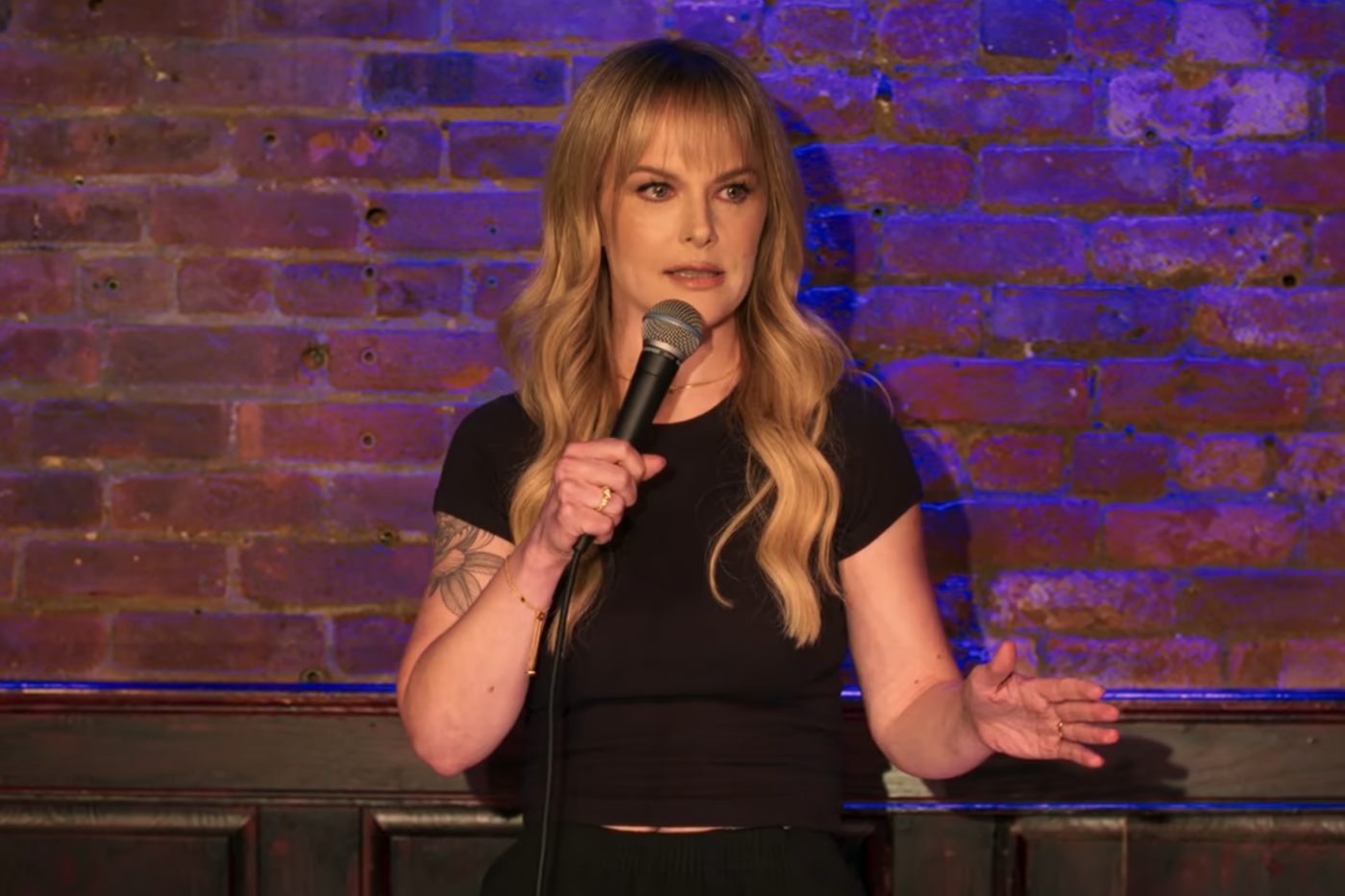
Stand-ups have been talking about being a parent forever, but the tone changed in the 21st century with comedians getting “real” about how difficult it is. Much of this shift started with Louis C.K.’s breakthrough material in the aughts about how his daughters were annoying and disgusting. Then in 2016’s Baby Cobra, Ali Wong set the record straight, famously while seven months pregnant, about how female comedians don’t get opportunities to talk about parenthood onstage because, unlike male comedians, they’re too busy recovering and actually parenting after their child’s birth. Nearly a decade later, The Mother Lode feels like another step forward for the genre; it pushes the frankness in which parenthood is discussed even further and, like Wong’s special, confronts the history of how pregnancy has been discussed in comedy. Rosebud Baker discusses how physically and emotionally demanding the IVF process was for her, all while her husband “is next door just, like, shooting ropes to another woman.” It’s a joke on her comedian husband and the many male comedians who have centralized their experience of the IVF process and told jokes about how difficult it was for them to masturbate in a cup.
Baker, who also directed The Mother Lode, filmed half of it while eight months pregnant and half while a year into motherhood, and the special cuts back and forth between the two. Through this choice, Baker plays on the common new-mother “nine months in, nine months out” meme, but she subverts the typical beatific tone of those posts by telling arguably the darkest jokes on the subject ever put in a major special: “[Strangers] are like, ‘Why wouldn’t you breastfeed?!’ I’m like, ‘Well, it’s none of your business, but if you have to know, it’s because we’re raising her autistic … She’s formula-fed. She’s got all her vaccines. Yeah, she’s gonna know her way around a map. Don’t come for me when my kid lays your kid out in the fucking spelling bee, okay?’” The back-and-forth editing also makes the audience at home consider how Baker has changed between the two tapings, and in turn, how parenthood does or does not change a person. Comedically and tonally, Baker feels the same — she tells the same type of joke, with the same pessimistic tone, yet viscerally conveys an existential transformation.
Ian Karmel, Comfort Beyond God’s Foresight (YouTube)

This special has three closers. That’s not to say it has multiple endings, like The Lord of the Rings: The Return of the King, but it has three jokes that are closer-worthy. It is difficult for a comedian to both think of a joke with enough meat on the bone and work to make sure to get all the meat off said bone, so it is tremendously impressive that Ian Karmel can do this multiple times in one special. There is one joke that starts with the premise that middle-aged men need hobbies to avoid becoming obsessed with conspiracy theories that builds to a brilliant five-minute flight of fancy in which Karmel holds off making a stupid pun on BBQ and QAnon because the last time he did, it killed someone from being too funny. It’s is the sort of big-swing, silly, form-breaking, conceptual bit that you don’t see much these days. It’s a great piece of work, good enough to end a show, and it comes 12 minutes into the special.
Dana Gould, Perfectly Normal (YouTube)

It’s hard to explain what alternative comedy is in 2025. Performing in nontraditional spaces has become common and commercialized, and the fractured media environment makes it difficult to define what’s “mainstream.” In this context, a new special from alternative-comedy leading light Dana Gould is a useful touchstone. Perfectly Normal doesn’t feel like a time machine back to the ’90s, but it’s a nice reminder of the sensibility that defined that revolutionary era of comedy. Gould, who used to work on The Simpsons, is an incredibly sharp writer, but his presentation is still conversational and sardonic, even when throwing out perfectly crafted jokes, like, “My father-in-law is an airline pilot. Do you know the difference between an airline pilot and God? God doesn’t walk around like a fucking airline pilot.”
While it’s become more common for comedians to be personal, Gould still cuts a bit deeper than is standard: “[My dad] was a very serious man — unless he was drinking and then he was hilarious. So I grew up with a dad who was really, really funny all the time.” This transitions into setting up a bit where the comedy is structured more like a sketch than a traditional stand-up joke, as Gould explains that his dad would sing Christmas carols all year but changed the lyrics to complain about his life. To the tune of “Jingle Bells”: “Oh, I make all the money and your mother spends it all / So I hope you want to be homeless ’cause we’re going to lose the house / Oh, your grandma’s sick, and she isn’t going to make it / And you better not cry ’cause I don’t like people’s feelings.” There are also whimsical dissections of obscure pop-culture references, like the movie Blacula, which ties into Gould mocking “podcasts dedicated to the resurgence of the alpha male,” which are currently as close to mainstream as comedy has right now. The dream of the ’90s is alive in Perfectly Normal.
Marcus D. Wiley, Marriage Is Major Surgery (YouTube)

There are some noticeable stylistic similarities between Marcus D. Wiley and Ali Siddiq, a modern master of the storytelling stand-up special who executive produced Marriage Is Major Surgery. Like Siddiq, Wiley starts the special by setting the table for the story he’s going to tell. Addressing the non-married members of the audience, he says, “Singles, I’m letting you look over the balcony of a marriage tonight, so you could see if this is something you want to do.” Then he explains the reasons why someone shouldn’t get married that double as a dog whistle to the audience members who are married and know exactly what he’s talking about. Then he starts the actual story of his 27-year (and counting) marriage with a similar clarity: “Let’s get into it, y’all. It was December 12, 1996. I was matriculating at the University of Texas Southern …” And like Siddiq, for the majority of the special, Wiley just tells the story of his relationship as it happened, and it’s thrilling to watch. Unfortunately, after 45 minutes, the structure changes, and instead of simply telling his story, Wiley shifts to riffing and pontificating on marriage more generally. This section is fun and occasionally insightful but comparatively generic. Still, as a whole, it’s impressive that Wiley is able to breathe new life into the most well-trodden of stand-up topics.
Aaron Weber, Signature Dish (YouTube)

Between February 2003 and May 2004, Comedy Central released 56 half-hour stand-up specials. (Some names with specials those years: Gabriel Iglesias, Bill Burr, Bruce Bruce, Paul F. Tompkins, Patrice O’Neal, Ron White, Daniel Tosh, Kevin Hart, Mike Birbiglia, and Tig Notaro.) In the era we’re currently in, everyone self-releases full hours, so it’s useful to remember the potential of well-curated, tightly written half-hours, in which a comedian who regularly performs on the road showcases all killer, no filler. And there have been some really strong half-hours released on YouTube recently. In February, Don’t Tell Comedy, “comedy’s benevolent gatekeeper,” released two great ones: Emma Willmann’s HR Booby Trap and Shapel Lacey’s Three Dads, Two Moms. Even better is Aaron Weber’s Signature Dish, which was executive-produced by Nate Bargatze and released on Bargatze’s YouTube channel (Weber co-hosts a podcast with Bargatze).
It’s hard not to see similarities between Weber and Bargatze; both are southern comedians whose acts lean heavily on deadpan stories where they are being dumb out in the world. Weber, for example, tells a story of enjoying a hot dog with cream cheese and grilled onions at a random stand outside the baseball stadium in Seattle and then evangelizing the stand for years, only to eventually learn this is a “Seattle dog” and they are served all over the city. Weber isn’t as silly as Bargatze but is a slightly sharper observer, like in his bit about Tums being a top-five candy in the country right now. It’s 30 minutes that’ll make a person excited to see his hour — a lot better than watching someone’s hour and wishing it could’ve been 30 minutes.
Sam Jay, Live in London (YouTube)
It’s hard to say if this is a special, especially because Sam Jay makes a point to call it a documentary. But I wouldn’t even call it a docuspecial, as the 37-minute Live in London features far less documentary footage than typically seen in that genre (it’s about 85 percent stand-up). It’s included here because, whatever it is, it feels like a more cohesive piece than most stand-up specials. Live in London captures Jay’s writing process — there are offstage conversations that turn into onstage material — but it also shows Jay process in real time what is happening to the U.S. weeks before the 2024 election (during which she correctly believed that Trump would win).
In any case, it’s fascinating and compelling to watch Jay muse on a topic for several minutes as she searches for a joke. There is a moment where she wrestles with the idea of people supporting Trump. She explains it doesn’t bother her because she never had faith in America: “I’m Black. I never have.” The audience is uneasy and silent until Jay finds the twist: “The real reason is I just don’t want to go back to taking dick.” Nothing against polished material, but there is an undeniable urgency to jokes told when the subject is still fresh.
Liza Treyger, Night Owl (Netflix)
There is a thrilling tension underneath all of Liza Treyger’s stand-up: How can a person be both this messy and this self-aware? “I will do whatever to not actually feel my feelings,” one joke starts in her special Night Owl. “Like, I tried to fix a printer, and I couldn’t do it, and I went to get a butterfly tattoo.” She then points to said tattoo on her forearm and says, “This is so big for someone who is pretty casual about butterflies.” It’s befuddling and endearing to experience someone who can be so oblivious in the moment yet so clear-eyed toward her past actions.
The best example of this in the special is a section about Treyger’s compulsive relationship to scrolling on her phone. She viscerally captures how it feels to know social media is draining your attention while being incapable of quitting. At one point, she captures how dire the situation is by saying, “As a child, if someone told you your one source of joy will be watching a horse you don’t know get its hoof cleaned …” As is the case with this joke, a lot of Treyger’s punch lines trail off. The special’s delivery style and structure are loose, but it’s fitting considering her onstage persona. This might frustrate a viewer who prefers jokes to end sharply, on hard consonants, and in a way that signals to the audience when to laugh, but for the most part, Treyger’s conversational style is refreshing, and the laughs she earns roll along with a unique rhythm.
Roy Wood Jr., Lonely Flowers (Hulu, Disney+)
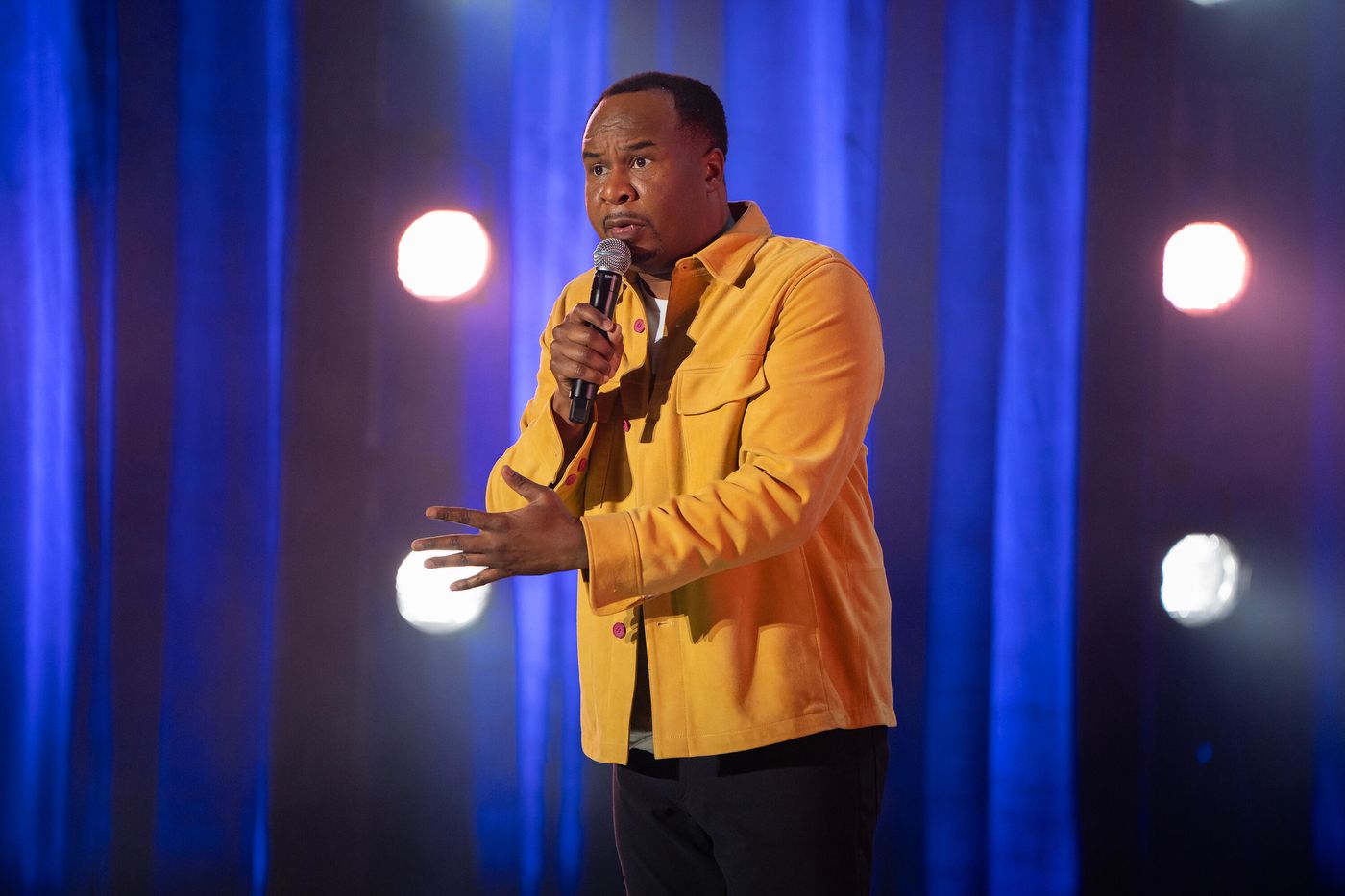
After releasing three excellent specials over four years with Comedy Central, it’s lovely to see Roy Wood Jr. free from the constraints of working for the network. Lonely Flowers shows one of the greatest stand-ups working today free to express himself to his full capacity. Especially in the genre of political comedy, which tends to be reactionary across all party identifications, Wood works with purpose and clear intention. Rather than delivering a special that feels like a grab bag of hot-button issues, he focuses on the idea of connection, exploring what is lost when we continue to eliminate human interaction even in places as seemingly mundane as a grocery-store checkout.
There is a form-following-function aspect to Wood’s performance as he strives to bring humanity to all of these everyday moments to get the audience to focus on the humanity lost in their everyday lives. Initially, while watching the special, I thought it featured a gratuitous use of callbacks, but then it became clear Wood was utilizing them not to show off, but to emphasize Lonely Flowers’s theme of creating moments of connection. No other living stand-up brings Wood’s level of thoughtfulness and sensitivity to political comedy. His mastery of both emotional honesty and sociopolitical truth-telling puts him in Richard Pryor territory.
Doug Stanhope, Discount Meat (YouTube)
While most stand-up comedians aspiring to be edgy these days focus their specials on the same ten supposedly untouchable topics, Doug Stanhope is genuinely transgressive. In Discount Meat, released on December 31, this manifests in material that is really out there in terms of appropriateness, like a 13-minute section comparing 9/11 to COVID or a shockingly thorough exploration of whether pedophiles go into having kids with the intention of molesting them one day. But beyond touching on edgy subjects, Stanhope’s work pushes back on orthodoxies. And Discount Meat focuses on the orthodoxies he’s seen among so-called political independents. In doing so, he offers a trenchant critique of a version of libertarianism that he used to be associated with that many in comedy have since embraced: “I’ve noticed a lot of anti-government people have become very pro-government in their efforts to get the government to get government out of our lives.”
The downside to the special’s unrelenting nature is that it can, at times, feel exhausting. Its watchability is also affected by its unusual presentation: Instead of showing Stanhope performing onstage, the camera focuses on a room filled with Stanhope-related paraphernalia and multiple old TVs playing his performance. It feels like you are in Stanhope’s bunker, watching specials on a pirated feed. It’s bizarre and might not be for everyone sitting down for some casual stand-up comedy after a long day at work, but for those ready to engage, Discount Meat’s unsettling style adds another layer of intrigue to the experience.